Your PVC is burning during processing, turning yellow and brittle, leading to piles of costly scrap. This unpredictability makes it impossible to run an efficient production line.
To make PVC stable, you must add a complete heat stabilizer system. This is a carefully balanced package of chemicals that neutralizes destructive acids released during heating, preventing degradation and ensuring a smooth, reliable process and durable final product.
I always tell my partners that raw PVC resin is fundamentally unstable. On its own, it cannot survive the heat of an extruder. It will degrade almost instantly. The stabilizer you add is not just an “additive”; it is a fundamental part of the compound’s structure. Think of it as the support system that allows the PVC to be shaped and formed without collapsing. But there are many types of support systems, so let’s break down the main options you will encounter and how they work together to create stability.
What are the different types of stabilizers for PVC?
You hear about Lead, Tin, and Calcium-Zinc stabilizers. The choices seem complex, and making the wrong one can lead to regulatory or processing issues down the road.
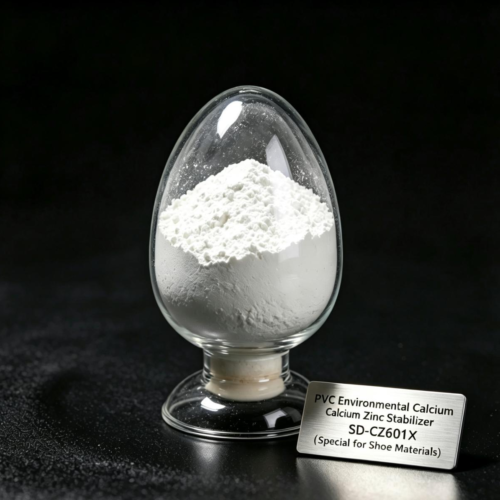
The main types are Lead-based, Tin-based, and Calcium-Zinc (Ca-Zn) systems. While lead was historically common, modern production relies on Tin for clarity and Ca-Zn for general-purpose rigid applications due to its safety and excellent performance balance.
The industry has moved through different generations of stabilizer technology, each with its own profile. Understanding them helps you see why Ca-Zn is the modern standard. Lead-based stabilizers offered a wide processing window and were cheap, but their high toxicity has led to them being phased out globally. Organotin (tin) stabilizers provide excellent thermal stability and clarity, making them ideal for transparent applications like bottles or film, but they are often the most expensive option. Calcium-Zinc (Ca-Zn) stabilizers have emerged as the best all-around solution.They are non-toxic, environmentally friendly, and cost-effective. The magic of modern Ca-Zn systems is in the “one-pack” formulation, where a blend of co-stabilizers and lubricants are included to deliver performance that now rivals and even exceeds lead systems for many applications.
| Stabilizer Type | Key Advantage | Key Disadvantage | Primary Application |
| Lead (Pb) | Wide processing window, low cost | Toxic, environmentally harmful | Phased out, historical use |
| Organotin (Sn) | Excellent clarity, high stability | High cost | Clear film, bottles, sheet |
| Calcium-Zinc (Ca-Zn) | Safe, cost-effective, good balance | Requires precise formulation | Pipes, profiles, wire & cable |
What do you add to increase the thermal stability of PVC compounds?
Your PVC is still showing signs of burning during long production runs. You’re using a stabilizer, but it feels like it’s not enough, causing frustration and waste.
To boost thermal stability, you add co-stabilizers. These are additives like epoxidized soybean oil (ESBO) or organic-based co-stabilizers (OBCS) that support the primary stabilizer to provide extra protection against heat, especially during long or demanding processing cycles.
Think of your stabilizer system as a team. The primary stabilizer is your main defender, but it needs help. That’s where co-stabilizers come in. They provide a second layer of defense and enhance overall performance. For example, Epoxidized Soybean Oil (ESBO) is a common liquid co-stabilizer that scavenges hydrochloric acid and also acts as a plasticizer, improving flexibility. For high-performance applications, we often integrate organic-based co-stabilizers like beta-diketones or uracils directly into our one-pack systems. These special molecules are excellent at improving the “early color” of the product and providing long-term heat stability. Other additives like hydrotalcites or zeolites can also be used as acid-scavenging “sponges.” A good one-pack formulation already contains the right blend of these boosters, tailored to your application so you don’t have to dose multiple small components.
Is calcium hydroxide a stabilizer for PVC?
You’ve heard that Calcium Hydroxide can be used in PVC. It’s cheap and readily available, making you wonder if it’s a simple secret to cutting stabilizer costs.
Yes, calcium hydroxide [Ca(OH)₂] can act as a low-cost acid scavenger, but it is not a complete stabilizer. It offers very poor lubrication and color hold, and it can cause serious processing issues. It cannot replace a balanced stabilizer system.
Using calcium hydroxide alone is like trying to build a house with only a hammer—it’s the wrong tool for the complete job. While it is a base and will neutralize the HCl acid that degrades PVC, that is all it does. It provides no lubrication, which is essential for smooth processing. In fact, it’s abrasive and can increase friction and wear on your extruder. It also often contains residual moisture, which can turn into steam at processing temperatures, creating voids and porosity in your final product. I have seen factories try to replace part of their one-pack stabilizer with cheap calcium hydroxide to save money. The result was a disaster: high scrap rates, poor color, and brittle pipes. A well-designed one-pack already contains powerful and efficient acid scavengers that are part of a balanced lubricating and stabilizing system.
What are the two types of stabilizers?
The terms “primary” and “secondary” stabilizers sound like complex chemistry. This jargon can be confusing, making it hard to have a technical discussion with suppliers or your own team.
Stabilizers can be classified into two functional types: Primary Stabilizers, which directly react with and neutralize HCl gas (e.g., metal soaps), and Secondary Stabilizers, which support the primary ones by absorbing HCl or preventing oxidation (e.g., ESBO, phosphites).
It’s helpful to think of this as a two-line defense system. The Primary Stabilizers are your frontline soldiers. These are the metal soaps (calcium stearate, zinc stearate) that are the core of a Ca-Zn system. Their main job is to find and neutralize the hydrochloric acid (HCl) molecule the instant it breaks away from the PVC chain, preventing a chain reaction of degradation. The Secondary Stabilizers are the support troops. They have several important jobs. Some, like ESBO, act as a backup to scavenge any HCl that gets past the first line. Others, like organic phosphites, are antioxidants and chelators. They protect the primary stabilizers, prevent discoloration from metal reactions, and improve the overall clarity and color of the final product. A successful one-pack stabilizer is not just a mixture; it’s a synergistic formulation where the primary and secondary components work together to provide a much greater effect than any single component could alone.
Conclusion
Making PVC stable requires a complete system, not just one chemical. A modern one-pack Ca-Zn stabilizer provides the right blend of primary and secondary components needed for robust, reliable production.